

Behind the Production
Case Study: The Promise in the Shell
A proof of concept exploring how AI-assisted production pipelines can support cinematic short film production while preserving the creative process.
Research – Kling O3 Pro
For this project, Kling O3 Pro was selected as the primary image-to-video model due to its strong motion quality, cinematic camera movements and support for reference-based generation. The model performs particularly well when animating a single image into a short, believable cinematic shot while preserving the composition and overall visual style. It also introduces dedicated multi-shot workflows and reference controls that are specifically designed to improve character and scene continuity across connected sequences.
Despite these improvements, maintaining perfect consistency across an entire production remains one of the biggest challenges in current AI video generation. Character appearance, clothing details, lighting and environmental elements can gradually drift between independently generated shots, especially when new scenes cannot always reuse the same reference images or visual anchors. While Kling O3 Pro significantly improves continuity compared to previous generations, achieving a cohesive multi-shot sequence still depends heavily on careful pre-production, consistent reference material and iterative refinement throughout the production process.
The Idea
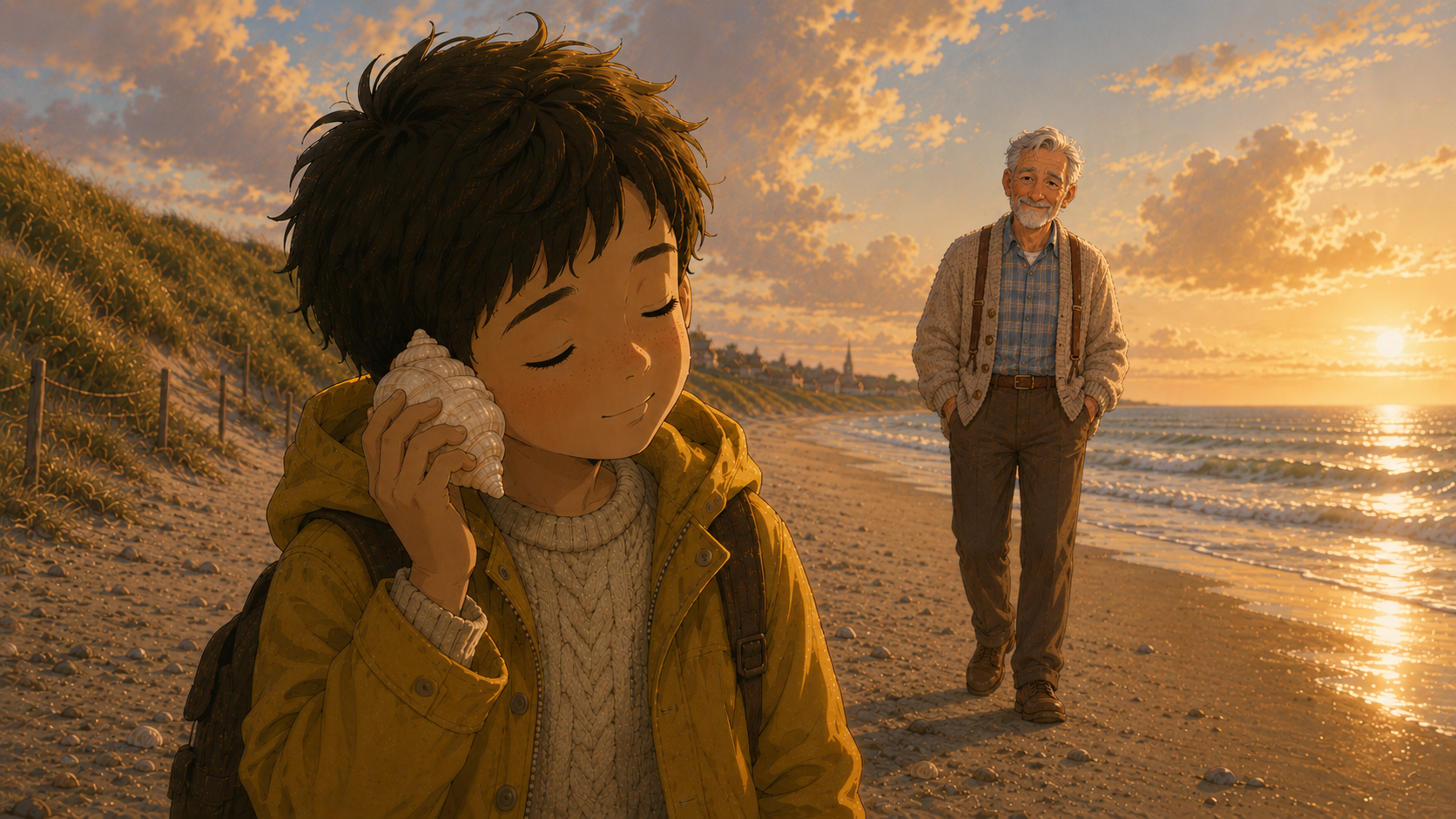
The Promise in the Shell is a project I had wanted to create ever since studying Animation & Audiovisual Design.
The story came from a fellow student. The idea stayed with me for years, waiting for the right opportunity to bring it to life.
With the rapid evolution of AI creative tools, I finally had the chance to turn that long-held concept into reality.
This short film is both a personal passion project and an exploration of AI-assisted animation and storytelling.
By combining traditional cinematic storytelling with modern AI workflows, from character design and storyboarding to image-to-video animation and music. I wanted to explore how these emerging technologies can support, rather than replace, the creative process.
The Challenge
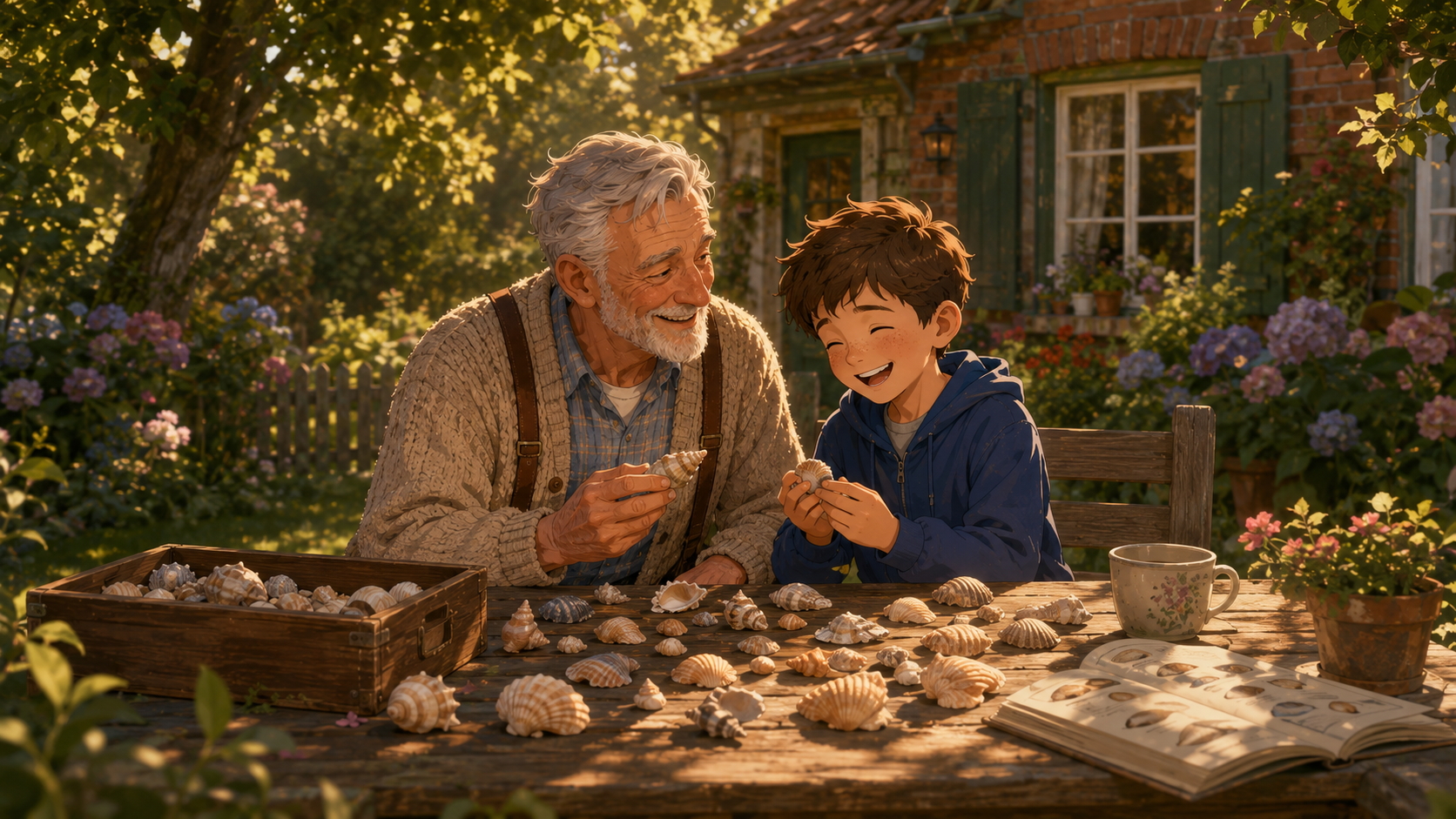
How can a small creator produce a cinematic animated short while maintaining visual consistency across characters, environments and shots?
Pre-production
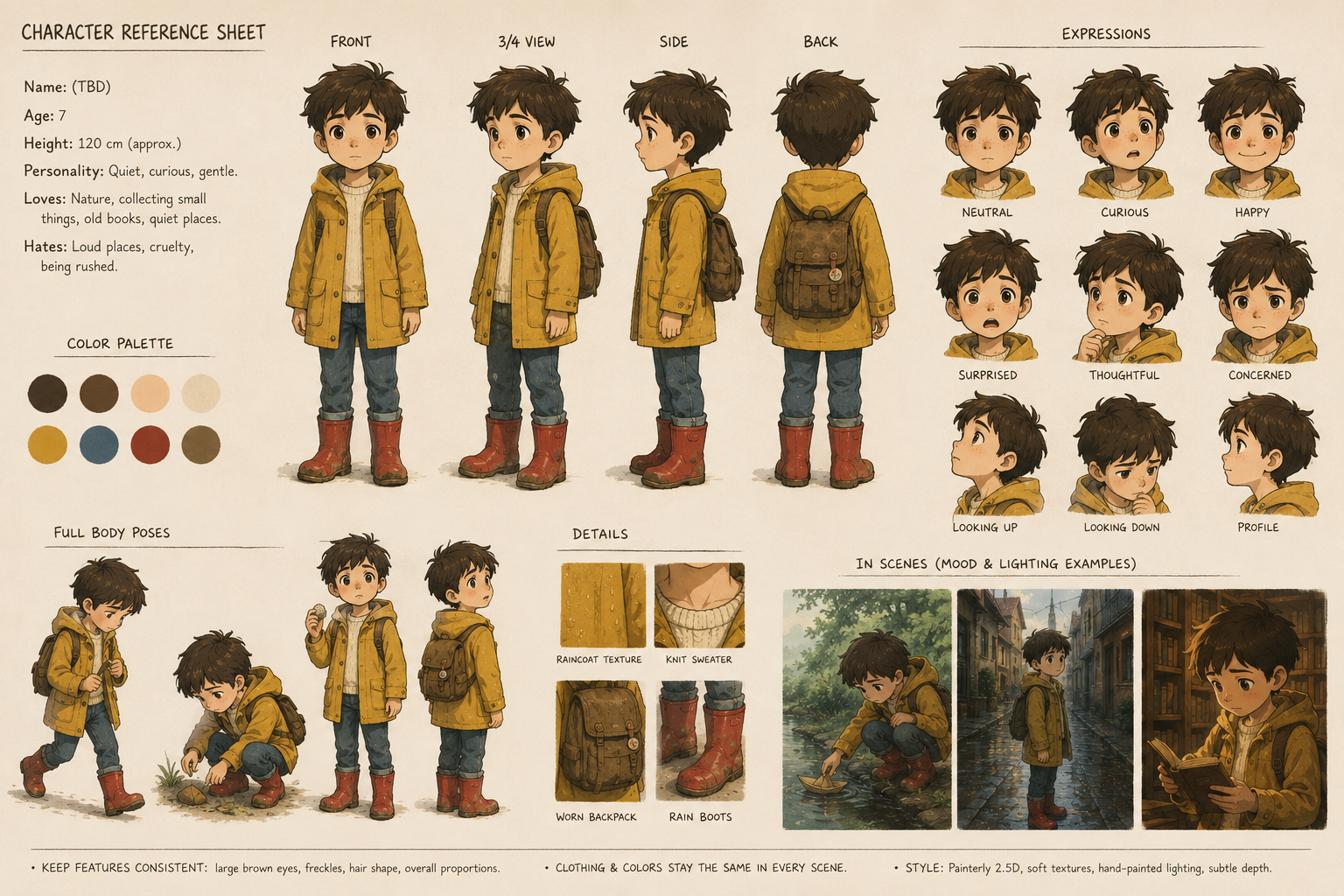
One of the biggest challenges in AI-assisted filmmaking is maintaining visual consistency throughout an entire production. Rather than generating individual images and hoping they would fit together, I approached The Promise in the Shell like a traditional animated short.
Before generating a single frame, I developed a complete pre-production package that included character bibles, environment bibles, visual references, storyboards and a detailed shot list. This provided a clear creative direction and served as the foundation for every stage of production.
By establishing the visual language early on, I was able to create a more consistent world, improve character continuity and streamline the overall production process. While AI played an important role in the project, careful planning and traditional pre-production proved to be just as essential in bringing the story to life.
Environment Bible
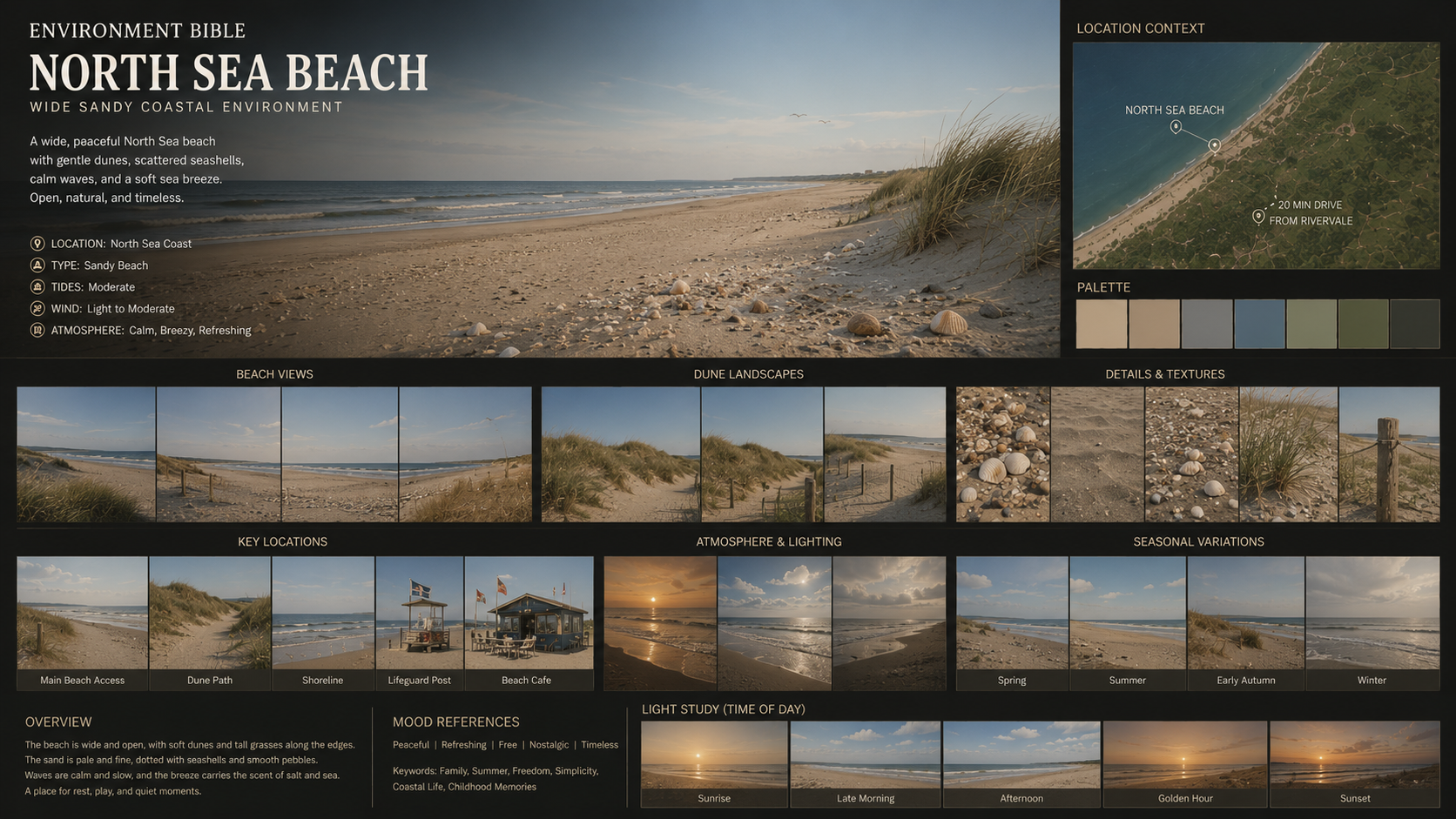
To create a believable and visually consistent world, I developed an environment bible before production began. This document defined the key locations, architectural style, colour palette, lighting conditions and overall atmosphere that would remain consistent throughout the film.
Each environment was designed not only to support the story emotionally, but also to provide reliable visual references for AI image generation and image-to-video workflows. Establishing these environments early in the process helped maintain continuity between shots and reduced the need for extensive revisions later in production.
Rather than treating each scene as an isolated image, the environment bible ensured that every location felt like part of the same world, strengthening both the visual identity and the storytelling.
Environment Bible
Family Home Environment Bible

Environment Bible
Rivervale Town Environment Bible

Character Bibles – Mother & Grandpa
To maintain visual consistency throughout the film, dedicated character bibles were created for both the mother and grandfather before production began. These documents defined each character's physical appearance, clothing, facial features, proportions, colour palette and overall personality, ensuring that every generated image remained faithful to the original design.
Beyond serving as visual references, the character bibles established a clear emotional identity for each character. The grandfather was designed to convey warmth, wisdom and comfort, while the mother reflects care, concern and quiet resilience. These visual and emotional guidelines helped maintain consistency across multiple scenes and provided reliable reference material for AI image generation and image-to-video workflows.


Importance of detailed character bibles
Creating detailed character bibles at the start of the project significantly reduced design drift throughout production and reinforced the film's overall visual coherence, demonstrating the continued importance of traditional pre-production practices within an AI-assisted creative pipeline.
Maintaining a Consistent 2.5D Visual Style
One of the key findings during production was the importance of reinforcing the desired visual style throughout the entire generation process. By consistently specifying a 2.5D cel-shaded aesthetic in prompts, and ensuring that all character bible references shared the same visual language, the AI was more likely to preserve a coherent look across multiple generations.
Rather than relying on prompts alone, the combination of consistent reference material and repeated stylistic guidance helped reduce visual drift between shots. While this approach does not completely eliminate inconsistencies, it significantly improved the overall continuity of character appearance, shading, proportions and artistic style throughout the production.
This demonstrated that a well-designed character bible is more than a visual reference; when paired with consistent prompting, it becomes an important tool for reinforcing style and maintaining a unified visual identity across an AI-assisted production pipeline.
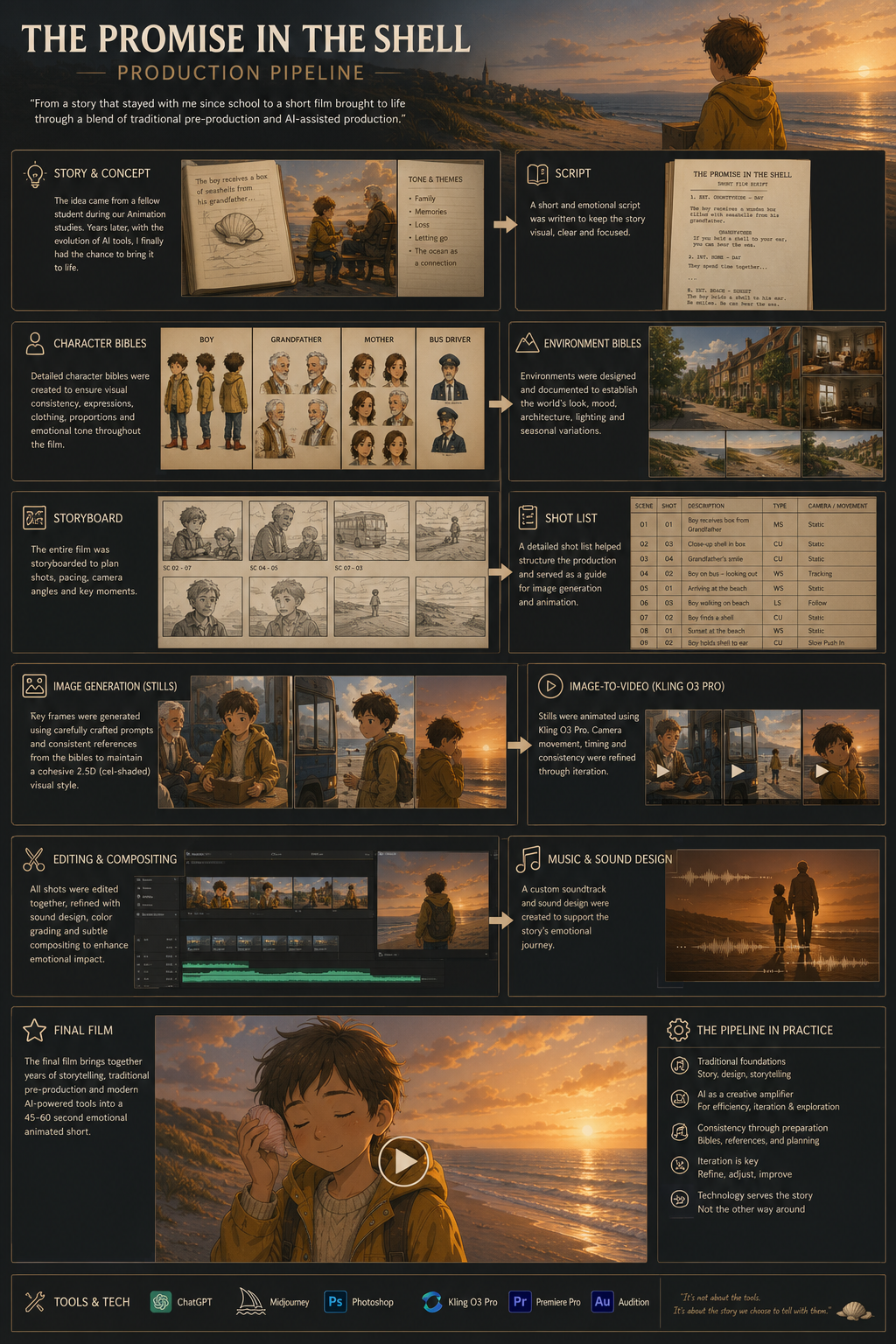
Production Pipeline
Every project starts with an idea, but turning that idea into a cohesive film requires much more than generating individual images. For The Promise in the Shell, I wanted to explore how a traditional animation workflow could be combined with modern AI tools while maintaining the importance of planning, visual consistency and storytelling.
Rather than relying on AI to "figure things out," the project was approached as a structured production. The process began with concept development and scriptwriting, followed by extensive pre-production. Character bibles, environment bibles, storyboards and a detailed shot list established the visual language before a single image was generated. These documents became the creative foundation of the project and significantly improved consistency throughout production.
Once the visual direction had been defined, keyframes were created using carefully crafted prompts and reference material. Maintaining a consistent 2.5D cel-shaded aesthetic required more than descriptive prompts alone; reinforcing the same artistic style across every generation and using consistent visual references proved essential in reducing character and environmental drift.
The generated stills were then animated using Kling O3 Pro. While the model delivered convincing camera movement and natural animation for individual shots, maintaining continuity across an entire sequence remained an iterative process. Each scene was reviewed, refined and regenerated where necessary to preserve the visual identity established during pre-production.